
- Samhain/Álfablót
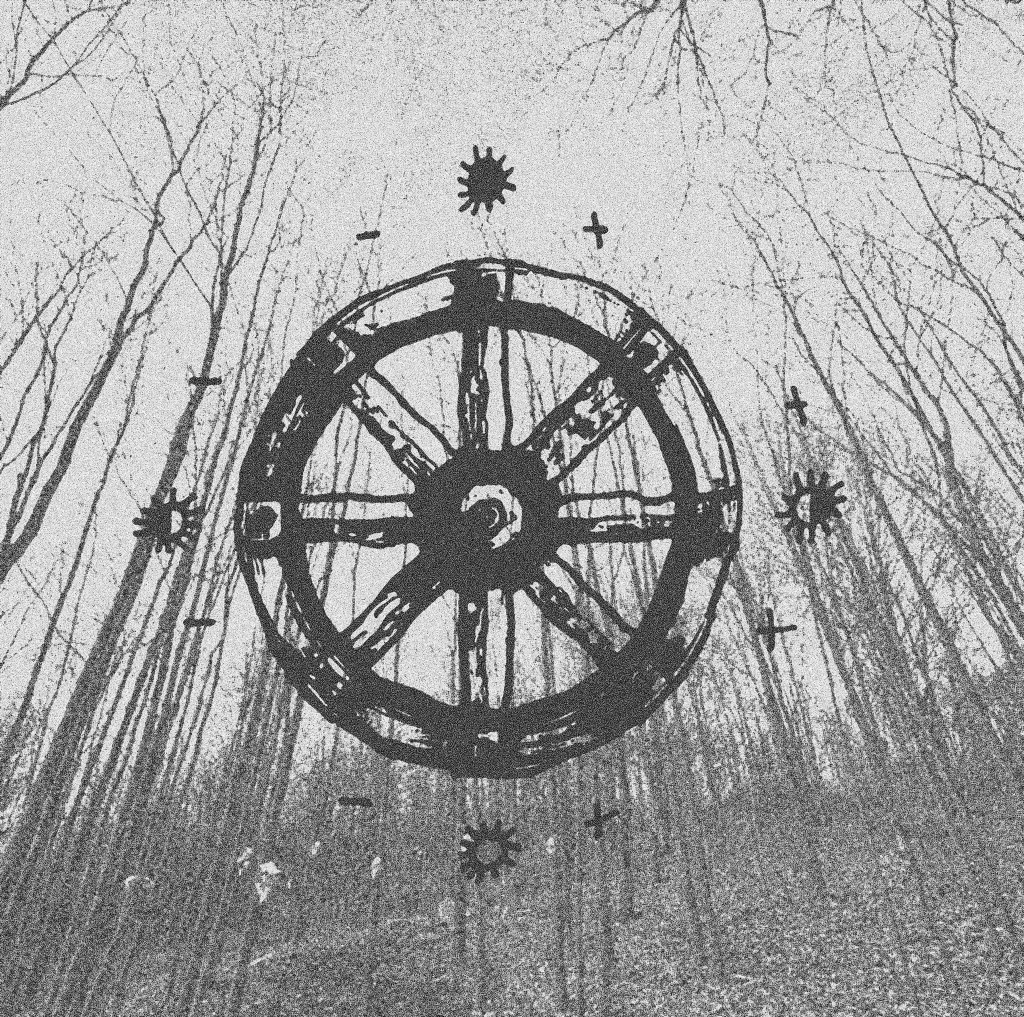
Samhain is a time when the spirits of nature, the dead, and the gods are most likely to emerge to walk amongst the living. During these days, when daylight becomes shorter and shorter, nature around us seems to die and shed its vitality, leaving trunks and branches barren, resembling bones protruding from the forest soil. This is a time when we are meant to shift our focus from outdoors to indoors and shed our dead weight from the previous year. By doing this, we are mirroring the process of nature and turning our energy inward. During this time of year come the final harvests, meaning that the workload is drastically cut down and many daily activities change. These hours were to now be replaced with indoor tasks such as tending to animals, repairing tools, spiritual practice, and performing various crafts such as woodworking, writing, or blacksmithing.
It is customary to make offerings to the deities, ancestors, and wandering spirits during this time in order to receive their favors, blessings, and good luck. We please the spirits to avoid their wrath. We offer to the ancestors to uphold family honor. We give our veneration to the gods to gain their power and visage. By performing rituals during this particular time of year, one enables themselves to access various forces and gain insight into the past, future, and matters regarding cause and effect within the present which will aid one’s progress moving forward.
In “A History of Pagan Europe” by Jones & Pennick, they write:
“Samhain (1 November). This was the most important festival of the year, showing the pastoralist, rather than agricultural, origin of the calendar. Samhain was the end of the grazing season, when flocks and herds were collected together, and only the breeding stock set aside from slaughter. It was a time of gathering-together of the tribe at their ritual centre for rituals of death and renewal, dedicated to the union of the tribal god (in Ireland, the Daghda) with a goddess of sovereignty, the Morrigan, or, more localised, Boann, deity of the River Boyne.”
As the last of the great harvests, Samhain brings reward and celebration, the end of one year and the transition into the next. According to many European tribes, Samhain marked the turning point between the years and represented the New Year celebration of their cultures. With Samhain we descend into “night,” resembling the womb of the goddess or the abode in which she resides. The goddess reigning over this time of year was almost always in the form of a grim, fate-controlling hag or crone, such as Hel or the Morrigan.
In “Celtic Mythology and Religion,” Macbain writes:
“Equal to Beltane in importance was the solemnity of Hallowe’en, known in Gaelic as Samhuinn or ‘summerend.’ Like Beltan it was sacred to the gods of light and of earth; Ceres, Apollo, and Dis also, must have been the deities whose worship was honoured. The earth goddess was celebrated for the ingathering of the fruits; Apollo or Belinus and Proserpine were bewailed for their disappearing from earth, and Dis, who was god of death and winter’s cold, and who was especially worshipped by the Celts, as Caesar says, was implored for mercy, and his subjects, the manes of the dead, had special worship directed to them. It was, indeed, a great festival—the festival of fire, fruits, and death.”
In reference to Norse and Germanic paganism, we see the worship of elves and land spirits was also common during this time. In modern Germanic paganism, many people celebrate Samhain under the name Álfablót (Elf Sacrifice), which is a time when harvests are reaped and sacrifices are made to the elves and gods. Elves and the dead are strongly connected to the ancient mounds of the Pagans, therefore, much of the activity surrounding this festival would have likely involved distributing offerings to the gods and conducting sacrifices directly upon the mound (or grave) of the dead. This is where the elves were thought to reside.
In “Sorcery and Religion in Ancient Scandinavia,” Vikernes gives us further examples pertaining to the Nordic new year and pre-Christian Halloween customs. He writes:
“The first holiday of the year was New Year’s Day, better known in English as Halloween (“initiation evening”), and in Gaelic as Samhain (“summer’s end”). The sorcerers and later the gods (i, e. religious kings) and their challengers dressed up as different creatures with access to the realm of the dead. They fasted and hung their clothes in a tree or the gallows, to make it look as if they had hanged themselves. They wounded themselves with a spear, to bleed, smeared ash or white mud all over their bodies to look like the dead, they put on masks and sacrificed a cow or an ox on the grave mound, so that the blood poured down and into the grave underneath; into the realm of the dead. They then blew a horn, in the Bronze Age a lure, to open up the entrance to the realm of the dead. They then travelled into hollow trees, caves in the mountain, holes in the ground, or more commonly into the burial mounds. These were all seen as entrances to the realm of the dead. Inside, in the darkness of the grave, a woman was waiting for them, sprinkled in the sacrificed animal’s blood and dressed like the queen of death. They then took at least some of the objects their dead forebears had been buried with and brought them back out.”
As we can see, Samhain (or Álfablót) type celebrations were not only distinct to Celtic and Germanic culture, but rather appear as a pan-European tradition representing a celebration of the dead, the ancestors, and the final harvests of the year. It is clear that no matter which form of paganism(s) one practices, the celebration and event known to us now as Halloween is of very ancient and sacred importance. Not only as a transitional period between the seasons, but as a time when it was believed to be easiest to pierce the veil between states and interact with beings outside of our normal cognition. It is because of the superstitions and pagan worldviews of the past that we have many (if not all) of our current yearly celebrations.
- Winter Solstice
The Winter Solstice marks the official rebirth of the Sun. At this time, daylight is the shortest of the year, meaning that after the cusp of the Solstice, the Sun will begin to rise higher and higher, making each day longer until the glorious Summer Solstice, when the process is reversed. During these days, which traditionally were considered the time of Yule, from Dec 21-Jan 1, people celebrated in much of the same way that we celebrate the 12 days of Christmas now. Gifts would be given and an evergreen tree would be erected in the household. If a tree was not brought indoors, one would be decorated outside instead. Sweets, treats, and various decorations would be arranged during this time, as there was much emphasis on creating joy and light within the home.
Oftentimes there would be animal sacrifices during Yule in order to minimize the herd and ensure food for the remaining winter. However, these have been widely replaced by crafted Yule goats and the sacrificial process has become largely symbolic. The 3 main (Germanic) deities usually venerated at this time (either together or individually) are Odin, Freyja/Freyr, and Thor. Based on your own preference and tradition, you can decide who you want to focus on, as most people tend to favor a specific deity at this time.
In “Teutonic Mythology,” Grimm gives us an example of a Nordic Yule custom involving a sacrificial boar dedicated to the god Freyr. He says:
“In the North, the expiatory boar, Sonargoltr, offered to Freyr, was a periodical sacrifice; and Sweden has continued down to modern times the practice of baking loaves and cakes on Yule-eve in the shape of a boar. This golden-bristled boar has left his track in inland Germany too. According to popular belief in Thuringia, whoever on Christmas Eve abstains from all food till suppertime, will get sight of a young golden pig, i.e. in olden times it was brought up last at the evening banquet. A Lauterbach ordinance (weisthum) of 1589 decreed, that unto a court holden the day of the Three-kings, therefore in Yule time, the holders of farm-steads (hubner) should furnish a clean goldferch (gold-hog) gelded while yet under milk; it was led round the benches, and no doubt slaughtered afterwards.”
Veneration for dead ancestors was especially practiced during this time. It was customary to leave food and various other offerings out for them as they wandered through the homes and villages of the living, along with Odin/Wotan and the “Wild Host” or “Wild Hunt.” Common offerings include(d) herbs, milk, honey, seeds, mead/wine, blood, and other food items such as nuts, fruit, bread, and meat. In alternative forms of the Wild Hunt myth, there would have been other figures leading this hunt, such as Freyja, Herne, or Thor.
Grimm writes in “Teutonic Mythology” regarding the Wild Hunt:
“At the same time Holda, like Wuotan, can also ride on the winds, clothed in terror, and she, like the god, belongs to the ‘wütende heer’. From this arose the fancy, that witches ride in Holla’s company (snow-Wives); it was already known to Burchard, and now in Upper Hesse and the Westerwald, Holle-riding, to ride with Holle, is equivalent to a witches’ ride. Into the same ‘furious host,’ according to a wide-spread popular belief, were adopted the souls of infants dying unbaptized; not having been christian’d, they remained heathen, and fell to heathen gods, to Wuotan or to Hulda.”
Odin/Wotan and Holle/Hulda/Holla were especially recognized during this time, likely due to their associations with darkness, magic, and storms. We see the concept emerge of a “Wild Hunt”, likely linked to violent and treacherous winter tempests that would rage throughout the land. Furious, screaming, cold wind is usually correlated with this gang, filled with spirits, ghosts, beasts, witches, ancestors, and deities. There are legends that speak of women leaving bastard children at the crossroads to be swept up into this Mighty Host, riding eternally of the winds of Wotan as offerings to the old god of death.
In “Sorcery and Religion in Ancient Scandinavia,” Vikernes writes:
“On the 25th day, that is when the Sun set on the 24th day of Himinbjorg, the Yule tide began, with the celebration of the Winter Solstice. The queen (or lady of the house) walked three times with the Sun around the house with a wand, a bough from the pine tree, a tree dedicated to Heimdallr, and declared that all the elves (i.e. the spirits of the dead) were welcome. The burial mounds were often built so that at Sunrise on the Winter Solstice the Sunlight entered the innermost chamber and lit it up, waking up the elves, just like Freyr had woken up the seeds in the ground when he sent the Sun beams to propose to Gerð (“fenced-in-field”). The elves (original meaning of the word is “white”) came with Heimdallr, the god who had been reborn as Vali on the first day of the year. He took the gifts he had received from the dead (i. e. that he had found in the burial mound) and in the silence of the night he gave them back to the living (i. e. the reborn dead). These items were seen as the gifts from the elves (the spirits of the dead), because the gifts came from the dead – the dead relatives of the living. So the reborn dead regained their properties: things they had owned in past lives.”
As seen in many ancient megalithic sites in Europe (and abroad) like Newgrange, the inner chambers or main altars are especially illuminated during the time of the Winter Solstice, indicating very focused and widespread veneration for this celestial event. The importance of this time to ancient man was likely attributed to this idea of the reborn Sun, which is mirrored in the later myth of Baldr returning to Midgard after the Fimbulvetr (Mighty Winter). In the modern age, it is difficult to know the magnitude of this occasion on ancient man. We can only speculate just how magnificent it must have been to witness this auspicious moment, ensuring that the Sun and Summer will return to us once again, and that life would continue to flourish.
In “The One-Eyed God” by Kershaw, it says:
“But most European feasts of masks occur between Christmas and Easter. As we have seen, Wodan’s time began with the last harvest, the real beginning of winter, which would vary from north to south, to around the spring equinox, but the masks were most active during the twelve holy days at the winter solstice. Yule, the midwinter feast, was still the feast of the changing year in Germania, and at such a boundarytime, we know, the boundaries between Jenseits and Diesseits also dissolve, and thus the dead are seen among the living.”
Clearly the time between Samhain (the last harvest) and the Spring Equinox was dedicated to these Pagan practices of taking on masks, celebrating the dead, and venerating the reborn Sun as it begins to finally wax towards its holy apex. The Winter was seen as a mighty force to appease, whether as a dark god, a crone goddess, or as the great Wolf who devours all. One was careful to prepare for this season’s arrival, whether in a tribe, village, or isolation. Everything depended on withstanding the Winter months, hence the old custom of age being linked to how many Winter seasons one has endured.
- Imbolc
Imbolc is the time of year when we eagerly await the changing weather in order to judge the remaining duration of Winter. On this day, if it snows or is very harsh outside, we rejoice, because according to ancient Irish Celtic tradition, it means the Winter Goddess, Cailleach (Veiled One), is asleep and Winter will likely end soon. However, if the weather is fair and fine, we can expect Cailleach to be out collecting more firewood and supplies, ensuring a longer and more treacherous Winter ahead. So, during this time, we hope for harsh weather and make offerings to various deities, generally Cailleach (Hel), Odin, and the local spirits. We like to be cautious of our noise production on this day, as we want to not wake the sleeping Crone.
Jones and Pennick give us a glimpse into these ancient Celtic customs:
“…the goddess known as Brighde in Ireland, Bride in Scotland and possibly Brigantia in the north of Britain. She had to do with warmth, fire, summer and possibly the Sun, since an Irish legend tells that in winter she was imprisoned in an icy mountain by a one-eyed hag.’ In some places she presided over thermal springs, presumably as the underground Sun, and in Scotland until the mid-twentieth century she was welcomed in at Imbolc (1 February) by the symbolic rekindling of the hearth fire after the house had been springcleaned from top to bottom.”
Reverence for fire and the Sun are important during this day, as soon the warmth of Spring will be arriving, bringing in longer days. Some European tribes marked Imbolc as their official beginning of Spring, but most considered it a celebration (and observation) of the ending Winter and the new beginning that lay ahead. Cleaning of the house and hearth would be essential during this time, preparing the living area for the next year of activities. Animal pens and beds would be changed and laundry would be washed. For those further North or in higher elevations, this day would have likely been celebrated differently, as we will see in the other quoted material.
In “Celtic Mythology and Religion,” Macbain writes:
“Candlemas day is known as La Fheill-Brighde, St Brigit’s day, who is really the canonised fire-goddess, the Vesta of the heathen Gaels. Some customs in regard to her worship were mentioned already, and Martin relates an interesting custom in the Western Isles on Candlemas, showing St Brigit clearly on the aspect of Vesta, the hearth and home goddess. The mistress and servants of each family take a sheaf of oats and dress it up in women’s apparel, put it in a large basket and lay a wooden club by it, and this they call Briid’s-bed, and then they cry thrice, “Briid is come, Briid is welcome.” Next morning they look in the ashes to see the impression of Briid’s club there, and if they do they reckon it a true presage of a good crop and prosperous year, and the contrary they regard an ill omen.”
As with the divination of ashes described above, various other means of prophecy would be undertaken to gather as much insight into the current (and future) situation as possible. Divination is a window into the workings of fate, a way to receive information directly from the wide Web of Wyrd. These cryptic bits of insight would be deciphered by a seer or seeress, sometimes a traveling witch, priestess, or the man of the household (priest). This would be their compass for how to focus their attention and energy as the year unfolded.
In “Sorcery and Religion in Ancient Scandinavia,” Vikernes writes:
“The 7th Sunday before Easter, usually the 1st of Þrúðheimr, was known as Washing, known from Gaelic as Imbolc or Imbolg (“washing”), and was regarded as the first day of spring. Washing lasted for a full week. The Sunday of Washing was called Pork Sunday, and this was the day Hel’s horse arrived with the news that Baldr would return. Everyone therefore gave thanks to Hel on this day. Pork Sunday was the day they transferred the fertility of spring to the women, by whipping their behinds with fresh birch branches. This custom survived well into the age of gods, and a form of this is in fact still practised in parts of Scandinavia.”
Common themes regarding this time of year include fire reverence, goddess worship, special recognition of the Sun, and veneration to the Winter Crone Cailleach (Hel). Exceptional attention was paid to washing and cleaning, as well as creating a new fire in the hearth of the home. Offerings were made to various deities in order to be blessed with a prosperous year and good health. With Imbolc came the glimmer of Spring and the glorious days of plenty that lie ahead. In many ways, this celebration started the people off on a clean slate.
- Spring Equinox/Ostara
The Spring Equinox marks the traditional Easter celebration, the moment when the Sun crosses the equator from south to north. This is when animals like rabbits, deer, chipmunks, and other creatures of the forest begin to have their offspring. Various flora also emerge around this time, dotting the landscape with hints of color. During the Spring Equinox we pay special attention to the great Goddess in her youthful form of Ostara, Goddess of the Dawn. Ostara is associated with the rising Sun in the East, fertility, and light; a beacon of joy and good fortune. To many ancient Germanic Pagans, Ostara was credited with Springs deliverance. From her name we derive the modern word Easter, nodding to the Pagan origins of this holiday. To Ostara we make offerings and pray for a good year, thanking her for the return of the light. In one particular myth, Ostara transforms a bird into a rabbit who would then lay colorful eggs for her, showing us where the core symbolism of our modern holiday came from.
In “Teutonic Mythology”, Grimm says:
“Ostara, Ēastre seems therefore to have been the divinity of the radiant dawn, of upspringing light, a spectacle that brings joy and blessing, whose meaning could be easily adapted to the resurrection-day of the Christian’s God. Bonfires were lighted at Easter, and according to a popular belief of long standing, the moment the sun rises on Easter Sunday morning, he gives three joyful leaps, he dances for joy. Water drawn on the Easter morning is, like that at Christmas, holy and healing; here also heathen notions seem to have grafted themselves on great Christian festivals. Maidens clothed in white, who at Easter, at the season of returning spring, show themselves in clefts of the rock and on mountains, are suggestive of the ancient goddess.”
It is customary to make generous offerings to the land spirits during this time, as this exchange nurtures the relationship with the local wildlife around the homestead. Examples would be seeds, nuts, fruits, bread, honey, water, kitchen scraps and other food items. This not only develops the connection between us and the land, but also boosts the local ecosystem, encouraging more organisms and ecological functions to flourish. By doing this, we also connect deeper with the natural order, by thoroughly observing the peculiarities of nature as it transitions through the seasons year after year.
In “A History of Pagan Europe” by Jones and Pennick, it says:
“The second term began in mid-March, later equated to Easter, mid-Lent or St. Gertrude’s Day (17 March). Pagan festivities at this time have been included in Easter, such as Easter eggs, taken from Baltic Paganism and the Easter rabbit or hare, which recalls the sacred hares of the British tribes. March or Easter was the second of three installments in the paying of dues, in the inspection and culling of livestock, and in the three terms of the ploughing year.”
With the Spring Equinox comes intense focus on preparations for Summer. Animals, vehicles, tools, and everything involved in yearly work would be analyzed, inspected, and if necessary, replaced or repaired. Mirroring the business of nature and the animals surrounding the homestead, we get to work as early as possible on the projects of the year, doing our best to not waste any time. The cleaning of the house and property was important during this period as well, identical to the modern practice of “Spring Cleaning.” Other crucial activities would be the germination (and sowing) of seeds, the preparation of soil, and the burning of debris and brush from the previous year.
In “Sorcery and Religion in Ancient Scandinavia” by Vikernes, it says:
“Easter began the 1st Sunday after the 1st Full Moon after Vernal Equinox, and was seen as the day Baidr/Bragi (and Nanna/ldunn) returned from Hel. This was the day the colours of nature returned after the darkness of winter. In the Easter they climbed the tallest mountains in the east, so they could see the Sunrise as early as was possible, on Easter morning. They carried round stones or other round objects with them up into the mountains, all symbols of the Sun, and built cairns on the mountain peaks. They did this to help the Sun rise and fly high again. They ate eggs in the morning and the candy (dried fruit, nuts etc.) left after winter was eaten. This was Idunn’s fruit, that they now, when she would return, could enjoy freely.”
We must remember that the equinox brings equal parts day and night, a pivotal moment when the Sun either begins to decay or grow stronger. This moment of union between light and darkness is to be ritually reflected, resulting in the “tipping of the scales” toward the light. During this transition, the Sun begins to wax again towards its apex, bringing longer hours of daylight. This auspicious celestial event brings hope and a sense of wellbeing to the people, who deified the experience in the youthful Goddess Ostara. To some people, whose geography implies only two seasons (Summer/Winter), the Spring Equinox actually indicated the beginning of Summer, the “light half” of the year, and thus would have held extremely important significance, paralleled to the solstices.
In “Gods and Myths of Northern Europe” by Davidson, it says:
“The believer in the old religion would find a great deal in Christianity which would seem to him familiar and right. The idea of a dying god was already known to him from the fertility cults, and the lament for Christ’s death on Good Friday followed by rejoicing in the Resurrection on Easter Day would follow a familiar pattern of death and renewal. The cycle of the Christian year was something to which he was already accustomed. Even the idea of God himself hanging upon a tree as a sacrifice was foreshadowed in the image of Odin upon Yggdrasill…”
We can see how this transitional period (and other celebrations of the year) were easily converted into Christian holidays by mimicking the familiar cycle of birth, death, and rebirth, although represented in a new way through the drama of Christ. By doing this, Christianity was easily able to take hold with the Pagan Europeans, allowing conversion to seem more “natural.” Not only this, but gods, goddesses, local spirits, and cultural heroes were transformed into various Saints and holy figures, stealthily concealing the old religion under new stories and religious customs. In this way, European Paganism deeply affected the intruding Christian religion, which still carries these ancient Pagan themes and elements within them such as the rabbit and colored eggs.
- May Day/Beltaine
May Day marks the true climax of Spring and transition into Summer in the Northern regions. During this month, many plants and herbs begin to emerge after the long winter, bringing a plethora of flora and fauna to the land. On May Day, many Pagans will resurrect their idols of fertility and parade them through the towns and fields, blessing and purifying them for the upcoming agricultural year. In many cases, this would be a goddess, and in others, a god would take its place in the wagon (or cart). Generally, an idol that represented the god/goddess would be housed in the wagon, other times, a person was chosen to embody the specific deity. In this case, everyone would treat the person as if he/she was the actual deity themselves, dressing them in flowers and other pleasant things.
Bonfires are customary during this time. Many people perform purification rituals using smoke and various other substances to cleanse themselves for the new year. Birch wood was most commonly used for these purposes and the smoke created would thus be walked through or “bathed” in. This was done to cleanse oneself and family of evil, sickness, and bad luck. Not only people, but livestock were said to be paraded through a pair of fires, ensuring a prosperous year, good health, and good harvests.
In “Celtic Mythology and Religion”, Macbain refers to the writings of Cormac:
“Most authorities hold, with Cormac, that there were two fires, between which and through which they passed their cattle and even their children. Criminals were made to stand between the two fires, and hence the proverb, in regard to a person in extreme danger, as the Rev. D Macqueen gives it, “He is betwixt two Beltein fires.”
Later, around the 12th century, “May Baskets” became common practice in Germanic culture, which involved hanging flowers on strangers’ doorknobs or delivering flowers to friends, family, and the local community. This is still done today in many parts of the world, where people will anonymously leave flowers on people’s doorsteps in honor of the season. Essentially, May Day revolves around life, youth, and the beauty of the natural world around us. Through the blessing and beauty of the May Queen, we are propelled into the new farming season with inspiration and vigor.
In “A History of Pagan Europe” by Jones & Pennick, it says:
“The second great festival of the year was Beltane or Cétshamhain (1 May, May Day). This was the beginning of the summer half of the year, also a pastoralist festival. As at Samhain, the lighting of bonfires was an important rite. Cattle were driven through the smoke to protect them in the coming season. Beltane may be connected with the Austrian deity Belenos, who was particularly associated with pastoralism, or it may simply take its name from the bright (bel) fires which were part of its celebration. Beltane is the only festival recorded in the ninth-century Welsh tales, a time when the Otherworld communicates with the world of humans, either through portents such as the dragon fight in the tale of Lludd and Llevelys, or through apparitions such as the hero Pwyll’s sighting of the goddess Rhiannon.”
As we can see from these various historical accounts, this particular event was of significant importance to not only Germanic and Celtic Pagans, but a pan-European celebration centered around a specific goddess, ritual cleansing, and Sun worship. Plenty of other cultures outside of Europe celebrate this occasion as well, such as the Native Americans, Persians, and Hindus. This renewal of life has been central to human experience for most of its history, promising us the glory of Summer and the proliferation of life.
In “Sorcery and Religion in Ancient Scandinavia,” Vikernes writes:
“On White Queen Monday they travelled the land to collect bacon, flour, eggs and other white food items for the large bride’s race. Dressed in white and wearing ribbons and wreaths of flowers they danced and sang all the way, from farm to farm, women and men, girls and boys, led by the king (alias the May King) and the queen (alias the May Queen), whether they were sorcerers or deities. The king and queen sat in a carriage, drawn by horses or the others in the procession. The queen did all the talking and the ladies and girls sang “Bride, bride, most beautiful bride”, to invite to the race all the women who believed they stood a chance at winning the bride’s race. The females in the procession wore men’s clothes on their upper bodies, and the men wore dresses, because they represented the hermaphroditic spirits. This custom remained even after the belief in spirits was supplemented with a belief in deities.”
On our homestead, May Day generally consists of uncovering our Freyr idol and walking him through the gardens and fields, either in a small mock-wagon or by hand. Once we have visited all the necessary areas, we return the idol to his altar and leave generous offerings for his blessings and fortune. Two fires are built in front of the altar and each ritual participant walks through them, purifying themselves of yearly baggage and giving personal thanks to the great Yngvi-Freyr. By doing this, each member can shed negative, dark, detrimental energies; inspiring wellbeing, clarity, and positive development.
- Summer Solstice/Midsummer
The Summer Solstice is the time of year when the daylight is longest, the power of the Sun is at its peak, and the solar cycle reaches its apex, tipping the scales towards the dark half of the year once again. After this turning point, the sunlight begins to wane, shortening the daylight minute by minute each day until the Winter Solstice. Typically, this was a time to celebrate the Sun, spend time outdoors, and enjoy the bliss of good weather. Mead, wine, and other beverages would be consumed, and great feasts would be enjoyed.
In “Teutonic Mythology” by Grimm, it is said:
“Twice in the year the sun changes his course, in summer to sink, in winter to rise. These turning-points of the sun were celebrated with great pomp in ancient times, and our St. John’s or Midsummer fires are a relic of the summer festival. The higher North, the stronger must have been the impression produced by either solstice, for at the time of the summer one there reigns almost perpetual day, and at the winter one perpetual night. Even Procopius describes how the men of Thule, after their 35 days’ night, climb the mountain-tops to catch sight of the nearing sun. Then they celebrate their holiest feast.”
Games and various competitions would be hosted along with other festivities such as dancing and music. Entertainment would be lively and abundant, encouraging joy and merriment among the community. In the Germanic context, many people honor the god Baldr during this time as a god of light and/or personification of the light of the Sun, which in a mythological context, “dies” and beings to decline after this time, mirrored by Baldr’s death and descent into Hel. Because of these connections, a common blot/ritual focus during the Summer Solstice is the death (or funeral) of Baldr, the god of light. Stone ships are erected, abundant offerings are made, and various sacrificial items are thrown into fire. These offerings are meant to aid Baldr in his journey on the long road of the underworld.
In “Celtic Mythology and Religion” by Macbain, he says:
“The midsummer festival, christianised into St John’s Eve and Day, for the celebration of the summer solstice, is not especially Celtic, as it is a Teutonic, feast. The wheels of wood, wrapped round with straw, set on fire, and sent rolling from a hillock summit, to end their course in some river or water, which thus typified the descending course of the sun onward till next solstice, is represented on Celtic ground by the occasional use of a wheel for producing the tinegin, but more especially by the custom in some districts of rolling the Beltane bannocks from the hill summit down its side. Shaw remarks – “They made the Deas-sail [at Midsummer] about their fields of corn with burning torches of wood in their hands, to obtain a blessing on their corn. This I have often seen, more, indeed, in the Lowlands than in the Highlands. On Midsummer Eve, they kindle fires near their cornfields, and walk round them with burning torches.” In Cornwall last century they used to perambulate the villages carrying lighted torches, and in Ireland the Eve of Midsummer was honoured with bonfires round which they carried torches.”
Large bonfires and “Sun-wheels” are made during this time, reflecting the power and glory of the Sun. Special attention was given to the goddess during this time as well, whether as a deification of the Sun itself, the Earth, the Mother, or a mix of the 3. Offerings such as flowers, cakes, milk, honey, and blood are given to the gods and spirits, a ritual exchange of abundance for abundance. As observed in the above quote, it was (and is) common practice to bring the energy of the Sun down to Earth in the form of a torch, then parade it through the fields, groves, or temples in order to bless them with this powerful energy.
In “A History of Pagan Europe” by Jones & Pennick, it says:
“…But the summer solstice, under its statutory date of 25 June, became a popular festivity early in Germanic history. The German word Sonnenwende always refers, in medieval texts, to the summer solstice, not to the winter solstice. At the end of the first century CE some German troops in the Roman army at Chesterholme listed their supplies for the celebration in a record which has come down to us. In the early seventh century, Bishop Eligius of Noyon in Flanders criticised the chants, carols and leaping practised by his flock on 24.”
Here we are given examples of some ancient Germanic practices revolving around the Summer Solstice. We are told of singing, chanting, and competitive games like “leaping”. Clearly, the Christian Romans were disturbed by this revelry, showing its clear Pagan origins. This turning point in the year was extremely important to observe, as it strikes a pivotal moment in the Sun’s lifecycle, affecting every aspect of our lives.
- Lughnasadh/Freyfaxi
Lughnasadh is named after the Celtic Sun god Lugh. This is a time when the first harvests of the year would be brought in and prosperity would begin to be felt amongst the community. Summer is fully in bloom and the golden fields and vibrant flowers mirror the glory of the powerful Sun above. During this time, people would feast and make offerings to the gods with the first fruits of the year. During Lughnasadh, there would be singing, music, games, competitions, and much more, as the people could finally begin to enjoy the rewards of their hard work so far that year. Traditionally, Lughnasadh is the first of the 3 great harvest celebrations, kicking off the sacred celebrations when humans reap the results of what they have sown.
In “Celtic Mythology and Religion,” Macbain writes:
“It is called in Scottish Gaelic “Lunasduinn,” in Irish “Lunasd,” old Irish “Lugnasad,” the fair of Lug. The legend says that Luga of the Long Arms, the Tuatha De Danann king, instituted this fair in honour of his foster-mother Tailtiu, queen of the Firbolgs. Hence the place where it was held was called Tailtiu after her, and is the modern Teltown. The fair was held, however, in all the capitals of ancient Ireland on that day. Games and manly sports characterised the assemblies. Luga, it may be noted, is the sun-god, who thus institutes the festival, and it is remarkable that at ancient Lyons, in France, called of old Lug-dunum, a festival was held on this very day, which was famous over all Gaul.”
Wrestling tournaments, races, and various games would have been held during this time in honor of the god Lugh, who is known for being highly skilled in many different areas. Archery, stone lifting, and weight throwing contests were said to have occurred, continuing into the modern day with summer events like the Highland Games. Sacrifices were also common in Pagan times, generally of a bull, and a feast would be made from its flesh, while a portion of the blood and other pieces were given to the gods.
In “A History of Pagan Europe” by Jones & Pennick, it is said:
“Lughnasadh (1 August, also called Bron Trograin) appears to have been imported into Ireland at a later date, perhaps by continental devotees of Lugh, who in the Irish pantheon is a latecomer, the ildánach, master of all skills, more modern in character than the other goddesses and gods. Correspondingly, Lughnasadh differs from the other three festivals in being agrarian in character, marking the harvest, and baking of the first loaf from the new grain. The deity honoured at Lughnasadh was Lugh, who was said to have instituted the games in honour of his foster-mother, Tailtiu. Tailtiu (Teltown) is in fact the name of the site of the festival in Tara. It is an ancient burial ground, and its name is thought to mean ‘fair’ or ‘lovely’, so if it ever was associated with a presiding goddess of that name, like Demeter in Greece she would have ruled both the Underworld and the fruits which sprang from it.”
In modern Germanic Pagan practice, Lughnasadh is recognized as Freyfaxi or “Frey Day,” replacing the Celtic Lugh with the Norse Freyr. Special and careful thanks are given to Lord Ingwaz/Yngvi/Freyr during this time to honor his power and acknowledge his benevolence. A general sense of peace should be felt on this day as well as an internal feeling of gratitude for all one has in life. As a god of wealth, Freyr makes us reflect on the things that make us feel a sense of prosperity in our lives.
In “Sorcery and Religion in Ancient Scandinavia” by Vikernes, it says:
“The 15th day of Alfheimr was Harvest Sacrifice (No. Slatteblot), also known as Wake-Up-Day, known from Gaelic as the festival of Lugh (“light”). The day marked the beginning of harvest. Before harvest could begin the grain spirit was killed and burned, or it was – in the shape of a goat made from last year’s straw – cut into bits and pieces and buried in the field’s four corners and in the field itself. By the time of the Bronze Age the spirit of light and grain had become a goddess and a god, Sibijo and Fraujaz, known from the Scandinavian mythology as Sif and Freyr respectively. The grain deity was still represented by a straw figure in animal form – usually a goat. In addition to this, the god was cut down with a sax, sickle or scythe in a sword dance. Finally, a symbol of the god, usually a loaf of bread or (in the most ancient of times) a cone, was cut into bits and pieces and buried with the straw animal in the field/meadow. The grain spirit had to die and be buried in the ground for new grain to come. They took the first straw harvested and made a new animal of it, then stored it in a safe place for next year’s Harvest Sacrifice.”
In summary, whether celebrating Lughnasadh or Freyfaxi, this is a time when the first fruits of the year are reaped and specific rituals are undertaken to ensure the fertility of the land. Skills are put on display and the community is brought together under a common aim: prosperity, happiness, and peace. It is important to give thanks to natural and local spirits for their blessings, and to the gods for their gifts. During Lughnasadh, we revel in the light, we feast, and we celebrate our good fortune.
- Autumn Equinox
The Autumn Equinox is the turning point in the year when daylight and darkness become even once again, tipping the scales towards the darkest period of the year when the nights grow longer than the days and the weather gets colder. Traditionally, harvests would be reaped during this time and various rituals were conducted for the gods and spirits residing over abundance. Attention was given to the spirits and ancestors as it was believed that this time was liminal and other realms were accessible. At the cusp of Equinox, the dark half of the year begins to slowly gain dominance.
Bonfires are especially common as well as sacrifices, whether physical or symbolic. People give thanks and ask for future abundant harvests, ensuring a healthy stock of goods for the upcoming Winter months. Much depended on this pivotal time of year and many rites were undertaken to guarantee success. Feasts would be widespread as well as games, echoing other Summer/Fall festivals in atmosphere. For us here in the Northeastern United States, many crops are ripening at this time, such as squash, tomatoes, and beans. With this comes canning and drying to stock pantries for the Winter.
In “Teutonic Mythology” by Grimm, it says:
“In some parts of northern England, in Yorkshire, especially Hallamshire, popular customs show remnants of the worship of Frieg. In the neighborhood of Dent, at certain seasons of the year, especially autumn, the country folk hold a procession and perform old dances, one called the giant’s dance: the leading giant they name Woden, and his wife Frigga, the principal action of the play consisting in two swords being swung and clashed together about the neck of a boy without hurting him.”
As seen above, many early English (and Germanic) peoples would honor the god/goddess Frieg (Frigga) and Woden (Odin) during this time. Woden/Wotan in early Germanic belief was sometimes associated with wheat fields, where offerings were left for his horse Sleipnir during pivotal moments of the year. Certain epithets of Odin give reason to believe that he has been worshipped as a benevolent god to some extent, reigning over wealth, fate, and general prosperity. Names like this include Farmatýr (Lord of Cargoes) and Óski (God of Wishes).
Regarding Odin and continental Pagan belief, Grimm also states:
“As these names [Woden/Mercury/Hermes], denoting the wagon and the mountain of the old god, have survived chiefly in Lower Germany, where heathenism maintained itself longest; a remarkable custom of the people in Lower Saxony at harvest-time points the same way. It is usual to leave a clump of standing corn in afield to Woden for his horse.”
Of all the ancient celebrations, the Autumn Equinox was the most difficult one to find any references for. My belief is that it was a lesser celebratory event and more centralized in each community, where the harvest would be brought in and the local spirits offered to. People were likely working hard and didn’t have time to prepare for anything large like they would during the last harvest of Samhain, which certainly would have taken the forefront in terms of importance, at least to the Pagan Celts.
In “The One-Eyed God” by Kershaw, it says:
“These times of transition are strange times, whether the transition is from month to month, or season to season, or year to year; they are times which are not quite one thing or the other. They are like boundary lines, which are not quite my property or yours, or doorways, which are not quite inside or outside. As Eitrem said, it is at these dividing lines of time and space that the dead and Hermes are particularly active.”
It was common to not only focus on the harvest at this time, but to also give special attention to the dead and gods (or spirits) associated with death. The year was to start its final stages of descent into darkness and the deified Sun/Light was to begin the darkest part of its journey through the underworld. Because of this, symbolic bonfires are lit in order to emulate the Sun and prolong the light.
In “Sorcery and Religion in Ancient Scandinavia” by Vikernes, it says:
“Odinn placed his eye in the grave, in the well of the past, every year, in order to learn from the past. This might sound strange, but his eye was the Sun, Baldr, that lost its power every autumn and therefore had to spend the winter in the world of the dead. In other words, Odinn had one eye in the world of the living and one eye in the world of the dead.”
Aside from the various gods, goddesses, and spirits of prosperity, it is clear that Odin and Frigga took a central role in (Germanic) Equinox observances in some areas of Pagan Europe. Odin (Woden) was recognized as a god of wishes, death, darkness, gifts, and clairvoyance, mirroring the exoteric liminality of the period between light and dark invoked by the Equinox. This external event is to also be reflected internally, as darkness begins to gain supremacy after this transition. We begin to look inward and conduct deeper spiritual work, creating light within to combat the impending darkness of Winter.
 Sun Archer : The Pursuit of the Ancient Truth.
Leave a comment